
Call 786-778-5810 | Scenarios Reviewed in 24 Hours | Lending in All 50 States
TGE Logo Tri-Global Equities

Vacant Land and Residential Lot Loans

Flexible financing for land purchases, development lots, and investor land opportunities. Build your real estate portfolio with specialized land financing nationwide.
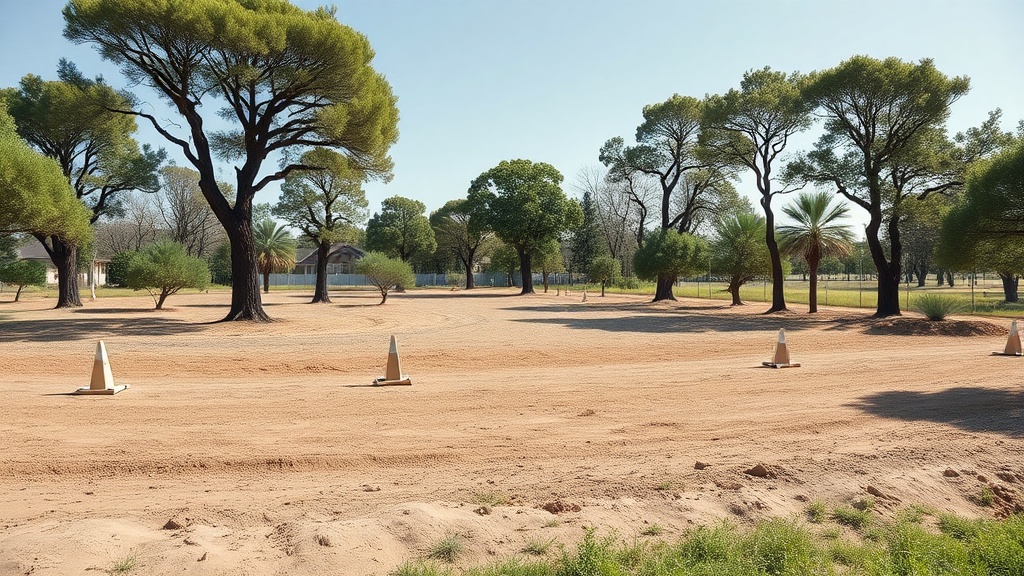
Vacant residential development lot with mature trees and development potential

Understanding Land Loans

Land loans are a specialized form of real estate financing used to acquire or capitalize undeveloped, partially developed, or entitled land. Unlike traditional residential or commercial loans, land financing is primarily evaluated based on the asset itself — including location, zoning, entitlement status, and future use — rather than existing income.

Because land does not generate cash flow, lenders focus heavily on risk, exit strategy, and marketability. This makes land loans more structured, more selective, and more dependent on how the deal is positioned.

When Land Loans Are Typically Used

  • Acquisition of raw or undeveloped land
  • Purchase of residential or subdivision lots
  • Land banking for future development
  • Bridge financing prior to construction
  • Assemblage of multiple parcels for larger projects
  • Situations where conventional lenders will not finance land

How Lenders Evaluate Land Deals

  • Loan-to-value based on current and future potential
  • Location, demand, and market absorption
  • Zoning, entitlements, and development feasibility
  • Access to utilities, roads, and infrastructure
  • Exit strategy (sale, refinance, or construction)
  • Borrower experience and liquidity

What Makes Land Financing Different

Land loans carry more risk than stabilized real estate, which is why they require stronger structuring. Traditional lenders often avoid land entirely, while private lenders focus on the asset, the plan, and the exit.

Well-structured land deals — with clear use cases, realistic timelines, and defined exit strategies — are far more likely to be approved and executed efficiently.

Eligible Land Types & How They Are Underwritten

We finance a broad range of land opportunities. Approval is driven by location, entitlement status, infrastructure, and a clearly defined exit strategy.

Residential & Development Land

  • Residential building lots and subdivisions
  • Development land with zoning approval
  • Infill and urban development parcels
  • Builder inventory land
  • Land with approved site plans
  • Agricultural land conversion projects
  • Mixed-use development sites

How These Deals Are Viewed

Residential and development land is evaluated based on buildability and timeline to execution. Lots with zoning approval, infrastructure access, and defined construction plans receive stronger leverage and more aggressive terms. Raw land without a clear path to development is approached more conservatively.

Investor & Land Holdings

  • Land for long-term investment and appreciation
  • Speculative development land
  • Rural acreage and agricultural holdings
  • Investment-grade residential land
  • Waterfront and premium positioned lots
  • Land portfolios and multi-parcel holdings
  • Land banking and strategic positioning

Risk & Exit Considerations

Long-term land investments are underwritten based on market growth, demand trends, and exit flexibility. Lenders focus on downside protection — ensuring the asset can be sold, refinanced, or repositioned under multiple scenarios. Larger parcels and land banking strategies require stronger equity positions and longer-term planning.

What Determines Approval

  • Loan-to-value based on current and future potential
  • Location quality and market absorption
  • Zoning, entitlements, and development readiness
  • Access to utilities, roads, and infrastructure
  • Borrower experience and execution capability
  • Defined exit strategy (build, sell, refinance)

The difference between approval and decline is rarely the asset alone — it's how the deal is structured, positioned, and presented to the right capital source.

Investor Land Financing — What Gets Approved

Not all land deals are created equal. Approval comes down to how the deal is structured, positioned, and supported — not just the asset itself.

Deals That Get Approved

  • Build-ready or near-entitled land with a clear use case
  • Defined exit strategy (construction, sale, or refinance)
  • Strong location with proven demand and absorption
  • Access to infrastructure (roads, utilities, zoning clarity)
  • Realistic timelines and execution plan
  • Borrowers with liquidity or experience — OR strong deal fundamentals

Deals That Get Declined

  • No clear exit strategy
  • Remote or low-demand locations
  • No zoning clarity or development path
  • Speculative land with no timeline
  • Overleveraged structures with no downside protection
  • Deals that rely on "hope" instead of data

How We Get Deals Done Others Can't

  • Asset-based lending approach (not bank-style restrictions)
  • Ability to structure around real-world deal scenarios
  • Access to multiple capital sources (not one box)
  • Flexible underwriting based on the full picture
  • Creative structuring for complex or time-sensitive deals
  • Experience placing deals other lenders decline

Our Advantage

We don't look at deals the way traditional lenders do. Where banks see limitations, we identify structure. Whether it's a refinance, acquisition, or repositioning strategy, we align the right capital with the right deal — even in situations where credit, timeline, or complexity would typically prevent approval.

If the deal makes sense, we can structure it.

Have a Deal? Let's Structure It

If your credit is above 550 and the deal has a viable structure, we can work with you. We specialize in structuring financing for real-world scenarios — not just perfect files.

Submit your deal and get real feedback within 24–48 hours.

Submit Your Deal — What We Need to Get You Approved

The more clearly your deal is structured, the faster we can get you real terms. Most deals can be reviewed within 24–48 hours when the right information is provided.

Minimum Information Required

  • Property address or location
  • Property type (land, SFR, condo, development, etc.)
  • Purchase price or current value
  • Loan amount requested
  • Exit strategy (build, sell, refinance)
  • Timeline for the project

Additional Information That Strengthens Your Deal

Site plans, zoning, or entitlement status • Construction budget (if applicable) • Rent roll or income projections • Comparable sales or market support • Borrower experience (if any) • Liquidity or available capital

What Happens After You Submit

We review your deal from a lender's perspective — focusing on structure, risk, and exit.

Initial feedback is typically provided within 24–48 hours.

If the deal meets lending criteria, we structure terms and align it with the appropriate capital source.

From there, we move directly into underwriting and execution.

What You Can Expect From Us

  • Straightforward feedback — no guesswork
  • Realistic deal structuring based on your scenario
  • Access to multiple lending options
  • Fast response times and clear communication
  • Solutions for deals other lenders decline

Before You Submit

You do not need a perfect file.

If your credit is above 550 and the deal has a viable structure, we can work with you.

We specialize in real-world scenarios — including deals with complexity, tight timelines, or prior lender pushback.

Get Real Terms — Not Hypotheticals

Submit your deal today and receive real feedback, real structure, and real next steps. No obligation. No wasted time.

Real Deals We've Structured

A look at how deals are actually evaluated, structured, and executed in real-world scenarios.

Cash-Out Refinance — 7 Finished Lots

Asset: 7 build-ready residential lots

Structure: Individual first-position loans (no cross-collateralization)

Total Loan: ~$1,600,000

LTV: ~50% of appraised value

Challenge: Prior lender hesitation due to market concerns

Solution: Reframed as asset-based liquidity play with strong downside protection

Outcome: Structured for flexibility, interest-only payments, and multiple exit options

Ground-Up Construction Completion

Asset: Mid-construction residential property

Loan Request: ~$1,483,000

As-Is Value: ~$850,000

ARV: ~$2,100,000+

Challenge: Limited comps and lender uncertainty on valuation

Solution: Structured around cost-to-complete and as-completed value, not current condition

Outcome: Positioned for construction completion with strong upside coverage

25-Lot Land Portfolio — Acquisition & Build Strategy

Asset: 25 finished lots (20 inland, 5 waterfront)

Total Value: ~$14,000,000

Loan Request: ~$7,000,000

Challenge: Large exposure and mixed asset types

Solution: Structured as asset-backed portfolio with phased exit via lot sales and construction

Outcome: Strong collateral coverage with multiple liquidity paths

What These Deals Have in Common

Every deal above worked because it was structured correctly.

Lenders don't just approve assets — they approve:

  • Clear exit strategies
  • Strong collateral positioning
  • Realistic timelines
  • Deals that make sense under multiple scenarios

This is where most borrowers go wrong.

Your Deal Might Be Closer Than You Think

Most deals that get declined aren't bad — they're just poorly structured.

If your credit is above 550 and the deal has a viable path, we can help you position it correctly and get it funded.

Why Deals Get Declined — And How to Fix Them

Most deals aren't declined because they're bad. They're declined because they're structured incorrectly or presented the wrong way.

Why Deals Get Declined

  • No clear exit strategy
  • Unrealistic valuation or projections
  • Weak or unsupported market data
  • No defined timeline or execution plan
  • Lack of liquidity or financial backing
  • Zoning, entitlement, or development uncertainty
  • Overleveraged deal structure
  • Incomplete or poorly presented information

How We Fix Them

  • Rework the deal structure around a clear exit
  • Align valuation with real market comps
  • Strengthen the narrative with supporting data
  • Define timelines lenders can underwrite confidently
  • Adjust leverage to improve approval probability
  • Position the asset based on its strongest attributes
  • Package the deal to match lender expectations
  • Route the deal to the right capital source

The Real Difference

Traditional lenders follow rigid guidelines. If your deal doesn't fit their box, it gets declined.

We approach deals differently.

We look at the asset, the structure, and the path to execution — then build a financing strategy around it.

That's why we're able to get deals done that other lenders won't touch.

If Your Deal Was Declined — It's Not Over

If you've been turned down before, it doesn't mean the deal doesn't work.

It usually means it wasn't structured correctly or shown to the right lender.

If your credit is above 550 and the deal has a viable path, we can help you reposition it and get it funded.

How Land Loans Transition Into Construction Financing

Land financing is often the first phase of a larger capital stack. This section explains how lenders evaluate the transition from land acquisition to vertical construction, and what borrowers should have in place before moving from one stage to the next.

What Lenders Want to See Before Transitioning to Construction

  • Clear zoning, entitlement, or development path
  • Realistic timeline for permits, approvals, and vertical start
  • Construction budget supported by credible assumptions
  • Site readiness, utility access, and infrastructure visibility
  • Adequate borrower liquidity and contingency reserves
  • A defined plan for completion, sale, or refinance

How the Transition Is Typically Structured

  • Land loan is used to acquire or hold the property during planning
  • Construction financing is layered in once plans, budget, and timing are sufficiently defined
  • Loan proceeds may be split between land payoff and vertical construction draws
  • Interest reserves, draw schedules, and inspections are often required
  • Final leverage depends on land basis, cost to complete, and projected as-completed value
  • Stronger planning and documentation usually result in better terms and smoother execution

Why This Stage Matters

The transition from land financing to construction is one of the most important points in the capital stack. Many projects fail not because the land is weak, but because the borrower moves into construction without a realistic budget, timeline, or exit. Lenders focus on whether the project can move from concept to execution without gaps in capital, approvals, or management.

What Improves Approval Odds

Borrowers are better positioned when they can show:

  • Approved or near-final plans
  • A detailed construction budget
  • A qualified builder or contractor team
  • A realistic draw schedule
  • Meaningful cash equity in the project
  • A clear refinance or sale exit once construction is complete

The cleaner the transition from land to construction, the easier it is for a lender to structure capital with confidence.

Frequently Asked Questions

Common questions about land financing and vacant lot loans.

What is a land loan?
A land loan (also called raw land financing or lot loan) is financing for vacant land, undeveloped property, or residential lots without structures. Land loans have different underwriting than traditional mortgages.
What types of land can I finance?
We finance residential lots, development land, rural acreage, builder lots, and land held for investment. The land must have potential for development or be located in a desirable area.
What down payment do I need for a land loan?
Land loans typically require 20-50% down depending on the property, location, and use. More down payment improves approval odds and loan terms.
Can I get construction financing combined with land financing?
Yes. We offer land loans that transition to construction financing, allowing you to build on your purchased land with a single loan product.
What documentation is required for a land loan?
We need proof of funds for down payment, credit history, property survey or legal description, site plans if available, and development timeline if applicable.
Are interest-only land loans available?
Yes. We offer interest-only options during development or for investors holding land. Principal payments can defer during construction phases.
How long can I finance vacant land?
Land loan terms typically range from 5-10 years, with options to extend or refinance into traditional financing once development begins.
Can I use land loans for investment land?
Yes. Investors purchase land for development, resale, or long-term holding. We evaluate the investment thesis and property location.

Ready to develop your land?

Get financing for land acquisition and development projects nationwide.