Call 786-778-5810

Specialized lending solutions for condos that don't meet traditional agency guidelines. Expert financing for investor-heavy buildings, condo hotels, and unique properties.
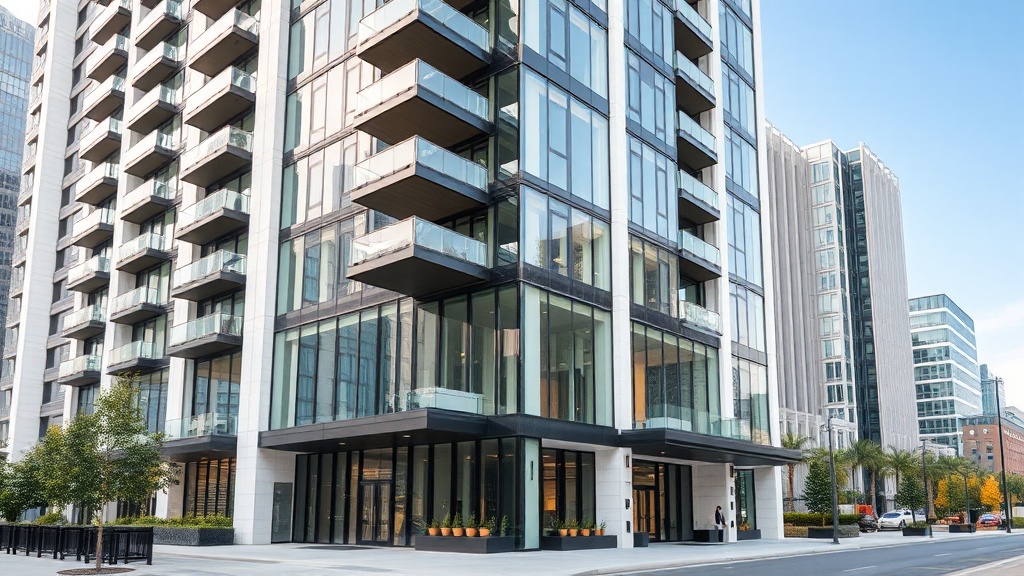
A condo that doesn't meet the guidelines of conventional, FHA, or VA loan programs due to building characteristics or ownership structure.
Non-warrantable condos are properties that fall outside conventional agency guidelines due to ownership concentration, litigation exposure, mixed-use components, deferred maintenance, or other project-level risk factors. These issues do not necessarily make the asset unfinanceable — they simply require more flexible underwriting and a lender comfortable evaluating the property beyond standard agency rules.
Projects with high investor ownership often exceed conventional financing thresholds, particularly when a large percentage of units are rented rather than owner-occupied. Agency lenders typically restrict this concentration because it can affect resale stability, project performance, and financing eligibility.
Active litigation, unresolved construction defects, HOA disputes, code violations, or insurance issues can disqualify a condo project from conventional financing. These factors introduce uncertainty around value, marketability, and lender risk.
Condo projects with meaningful retail, hospitality, or commercial square footage often fall outside standard conventional guidelines. These properties typically require a lender that can evaluate the full asset profile rather than rely on agency conformity alone.
We work with properties facing challenges that traditional lenders won't touch. Here are common issues we solve.
Most borrowers focus on credit. We focus on the asset, the structure, and the exit. This is how deals get done when traditional lenders say no.
At TRI-GLOBAL EQUITIES, we approach lending differently. We are not a bank, and we do not rely on rigid guidelines that eliminate otherwise strong opportunities. Every deal is evaluated based on the real risk — the property, the numbers, and the execution plan.
This allows us to structure financing for borrowers who are often overlooked by traditional lenders, including those with credit challenges, unconventional income, or complex deal structures.
We do not approve or decline deals based on a single metric. Approval comes down to how the deal is structured.
We focus on:
If the deal makes sense on paper and can be executed in the real world, we can typically structure a solution.
Traditional lenders rely on rigid underwriting — income verification, tax returns, and standardized guidelines.
We take a deal-first approach.
That means:
This is why many of our clients come to us after being turned down elsewhere — and still get funded.
If there is a viable deal, we will find a way to structure it.
Real examples of how we finance problematic condos and help borrowers move forward.
Scenario: Condo building with 45% investor-owned units. Traditional banks declined due to 30% investor threshold.
Solution: Non-warrantable condo program approval, competitive rate despite investor concentration.
Scenario: Building has active lawsuit regarding construction defects. No conventional financing available.
Solution: We evaluate lawsuit specifics, reserves, and timeline. Approve with reserve requirements or escrow.
Scenario: Building converted to condo hotel model with shared amenities and nightly bookings. Banks won't approve.
Solution: Non-warrantable condo financing for transient-use and mixed-use buildings.
Scenario: HOA reserves below conventional lender thresholds. Pending special assessment threatens property value.
Solution: Flexible underwriting with reserve analysis and conditions to monitor building health.
Scenario: Condo with commercial tenants on ground floor. Residential units above. Banks decline due to mixed-use.
Solution: Non-warrantable program with focus on residential unit and individual financing.
Scenario: Building allows short-term rentals (Airbnb). No traditional financing for income-producing units.
Solution: DSCR or non-warrantable condo financing for short-term rental units within condos.
We finance borrowers and properties that fall outside conventional lending guidelines. Qualification is driven primarily by asset quality, equity position, and exit strategy — not just W-2 income or agency eligibility.
Primary residence buyers purchasing in non-warrantable or investor-heavy buildings. Approval is based on property quality, equity contribution, and overall risk profile rather than strict agency eligibility.
Investors acquiring or refinancing units in non-warrantable projects, including rental portfolios, short-term rental strategies, and value-add repositioning opportunities.
Self-employed, commission-based, or asset-based borrowers using bank statements, 1099 income, or alternative documentation instead of traditional W-2 verification.
Borrowers with prior credit events, late payments, or recent recovery are evaluated on current financial position, liquidity, and deal strength rather than strict credit score thresholds.
Transactions typically require meaningful equity or down payment, often in the 20%–35% range depending on project risk, borrower profile, and exit strategy.
We finance non-warrantable condo transactions across major U.S. markets, including complex projects that traditional lenders decline due to litigation, ownership concentration, or mixed-use exposure.
Common questions about non-warrantable condo financing and how we can help.